

SUMMER IS COMING! – ELECTROLYTES BELONG IN EVERY FEEDING CHAMBER
Electrolytes are salts that are essential for metabolism. They play an important role in maintaining osmotic pressure in cells, regulate nutrient and fluid exchange, and are involved in acid-base balance.
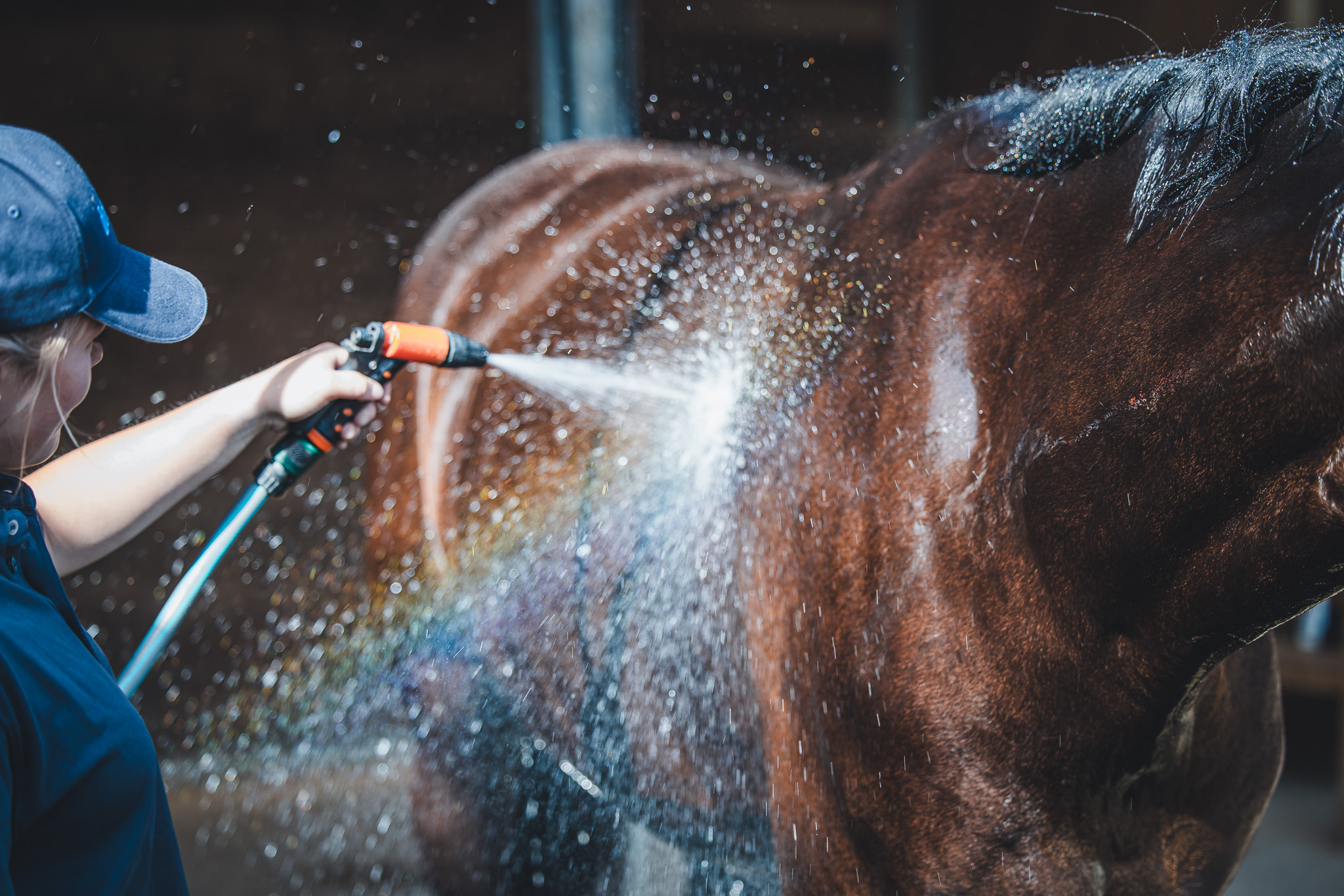
The amount of sweat produced by a horse varies greatly from horse to horse, but it can easily lose up to 10 liters of sweat during work. Eventing and endurance horses often lose significantly more sweat. In addition to water, sweat also contains sodium, potassium, and chlorine, among other things. Since the body cannot produce electrolytes itself, they must be supplemented through feed. If the loss of electrolytes is not compensated for, it can lead to a drop in performance, muscle cramps or tremors, and delayed recovery.
However, horses can lose electrolytes not only during physical work, but also when they are ill. If the horse sweats heavily, for example during colic, electrolytes are also lost in the sweat. If a horse suffers from diarrhea, electrolyte loss can also occur.
When feeding electrolytes, it is important to ensure that water is always available for free intake. Electrolytes can be fed up to 4 hours before exercise, but should be supplemented especially afterwards. An adequate supply of roughage supports electrolyte availability. The electrolytes contained in roughage remain in the large intestine for a long time with the food pulp, creating a water and electrolyte reservoir. Sodium and chlorine are only absorbed by the body in the large intestine, while potassium is already absorbed in the small intestine. The higher the current requirement, the more effective the absorption.
Supplementing with electrolytes beyond the requirement is not advisable, as this can affect the acid-base balance in the blood and must be excreted by the horse in the urine, which puts strain on the metabolism.
Conclusion: With moderate sweat loss, the electrolyte requirement is met by sufficient hay feeding with mineral feed and a salt lick. Only when the horse sweats heavily is it important and advisable to supplement electrolytes. The loss should be compensated for over several days.
Electrolytes are available in various forms (liquids, powders, and pellets) so that they can be added to the feed. Alternatively, electrolytes can also be dissolved in water or mash. However, horses should be slowly accustomed to this so that they do not refuse to drink the water due to the salty taste.